
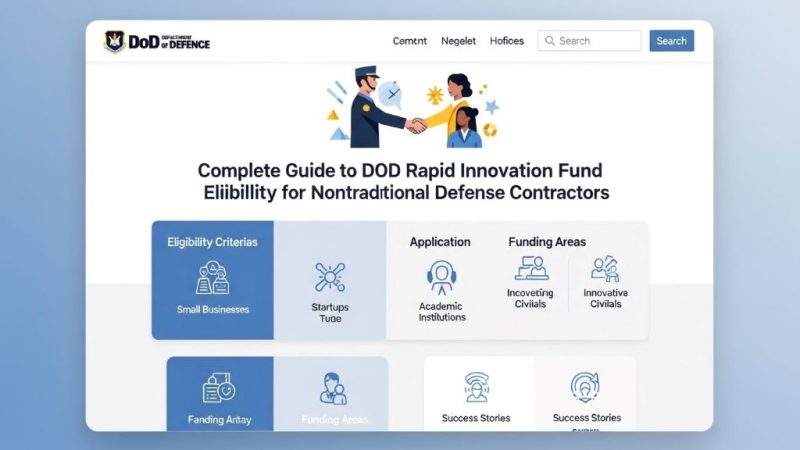
The Department of Defense Rapid Innovation Fund offers exciting opportunities for innovative companies. However, understanding the eligibility requirements can be challenging. This guide breaks down everything nontraditional vendors need to know about qualifying for this competitive funding program.
What Is the DoD Rapid Innovation Fund?
The Rapid Innovation Fund (RIF) supports innovative technologies that can quickly transition to military use. Additionally, it focuses on solutions that address urgent operational needs. The program primarily targets companies that haven’t traditionally worked with the Defense Department.
The fund aims to accelerate the development of promising technologies. Therefore, it provides financial support to bring innovative ideas from concept to reality. Projects typically move faster than standard DoD acquisition programs.
Understanding Nontraditional Defense Contractors
Before diving into eligibility criteria, it’s essential to understand what qualifies as a nontraditional defense contractor. The DoD defines these vendors very specifically.
A nontraditional defense contractor is any entity that has not entered into a contract with the DoD. Moreover, this applies to contracts exceeding a certain threshold within the previous year. However, the definition can vary slightly depending on the specific program.
These companies bring fresh perspectives to defense challenges. They often come from commercial sectors with cutting-edge technologies. Consequently, they can offer innovative solutions that traditional contractors might overlook.
Primary Eligibility Requirements
Meeting the basic eligibility criteria is the first step toward securing RIF funding. The requirements focus on both the type of vendor and the nature of the proposed project.
Contractor Status Requirements
Your company must qualify as a nontraditional defense contractor or work with one. Alternatively, you can participate if at least one-third of project costs come from sources other than the federal government. This structure encourages diverse participation in defense innovation.
Small businesses often have an advantage in RIF competitions. Furthermore, partnerships between traditional and nontraditional contractors are welcomed. These collaborations can combine industry expertise with innovative approaches.
Technology Maturation Level
The RIF targets technologies at specific maturation stages. Your innovation should be beyond the basic research phase. However, it shouldn’t be ready for full-scale production yet.
Projects typically fall between Technology Readiness Levels 3 and 7. This means you’ve proven the concept works in relevant environments. Additionally, you’re moving toward system prototypes and demonstrations.
Project Duration and Funding Limits
RIF projects must demonstrate rapid transition potential. Therefore, they generally run for 24 months or less. This timeline ensures quick delivery of capabilities to warfighters.
Funding amounts vary but typically range from hundreds of thousands to several million dollars. Nevertheless, the exact limits depend on the specific solicitation and technology area. Projects must show clear pathways to fielding within five years of initial investment.
Technical and Operational Requirements
Beyond basic eligibility, your project must meet specific technical standards. The DoD evaluates proposals based on innovation, feasibility, and military relevance.
Innovation and Technical Merit
Your technology should offer significant improvements over existing solutions. Moreover, it must demonstrate clear technical advantages. The evaluation committee looks for breakthrough innovations rather than incremental improvements.
The proposal should explain how your approach differs from current methods. Additionally, you must provide evidence of technical feasibility. Test results, prototypes, or proof-of-concept demonstrations strengthen your application.
Military Relevance and Transition Plan
Every RIF project must address real DoD needs. Therefore, you should identify specific military applications for your technology. The proposal must explain how warfighters will benefit from your innovation.
A solid transition plan is crucial for success. You need to show how the technology will move from development to deployment. Furthermore, identifying potential military customers or sponsors strengthens your proposal significantly.
According to defense acquisition guidelines, demonstrating a clear path to procurement is essential for all DoD innovations.

Documentation and Proposal Requirements
Submitting a competitive RIF proposal requires thorough documentation. The application process demands attention to detail and comprehensive planning.
Required Proposal Elements
Your technical proposal must include detailed descriptions of the innovation. Additionally, you need to provide project schedules, milestones, and deliverables. Cost proposals should break down all expenses clearly.
The proposal should demonstrate your team’s qualifications and experience. Moreover, include relevant past performance information. Letters of support from potential DoD customers can strengthen your application considerably.
Business and Financial Documentation
Companies must prove their financial stability and management capability. Therefore, submit recent financial statements and organizational charts. Additionally, provide details about your accounting systems and business practices.
If you’re partnering with other organizations, include teaming agreements. These documents should clearly outline each partner’s responsibilities and contributions. Furthermore, explain how the partnership enhances the project’s success potential.
Common Pitfalls to Avoid
Many applicants make preventable mistakes during the application process. Understanding these common errors can improve your chances of success.
Insufficient Military Connection
Some proposals focus too heavily on commercial applications. However, RIF requires clear military relevance. Therefore, always emphasize how your technology addresses specific DoD challenges.
Failing to identify military end users is another frequent mistake. Connect with potential DoD customers early in the process. Additionally, their input can help refine your proposal and demonstrate genuine need.
Unrealistic Timelines or Budgets
Overly ambitious schedules often raise red flags with reviewers. Your timeline must be achievable within the 24-month constraint. Moreover, budget estimates should reflect realistic costs for all project activities.
Underestimating costs can doom a project before it starts. Therefore, include contingencies for unexpected challenges. However, avoid padding budgets excessively, as this reduces competitiveness.
Special Considerations for Small Businesses
Small businesses receive particular attention in RIF competitions. The DoD actively seeks to expand its supplier base through these programs.
Many RIF solicitations set aside funding specifically for small businesses. Additionally, these companies may receive preferential treatment in evaluation. However, you still must meet all technical and programmatic requirements.
Small Business Innovation Research (SBIR) graduates often transition well to RIF. The programs complement each other in the technology development pipeline. Furthermore, SBIR Phase II companies can leverage their results when applying for RIF funding.
According to the Small Business Administration’s contracting guidelines, nontraditional contractors bring valuable diversity to federal procurement.
The Selection Process
Understanding how proposals are evaluated helps you prepare stronger applications. The DoD uses a structured review process for all RIF submissions.
Technical merit typically carries the most weight in evaluations. Reviewers assess innovation, feasibility, and approach. Additionally, they consider your team’s qualifications and resources.
The transition strategy receives significant attention during reviews. Evaluators want to see realistic plans for moving technology to operational use. Therefore, demonstrating DoD engagement and support is crucial.
Cost reasonableness is another important factor. Your budget must align with proposed activities and timelines. Moreover, reviewers compare costs against expected benefits and capabilities.
Post-Award Requirements
Winning a RIF award comes with ongoing obligations and expectations. Understanding these requirements helps ensure project success.
Regular reporting is mandatory for all funded projects. You’ll submit technical and financial reports on specified schedules. Additionally, the DoD may conduct site visits to monitor progress.
Maintaining communication with your contracting officer is essential. They can provide guidance on programmatic issues and help navigate challenges. Furthermore, keeping them informed of progress builds trust and credibility.
Intellectual property considerations are important throughout the project. The government may receive certain rights to technologies developed with RIF funding. Therefore, understanding these terms before starting work prevents future disputes.
Conclusion
The DoD Rapid Innovation Fund provides valuable opportunities for nontraditional vendors to contribute to national defense. Understanding eligibility criteria is the first step toward successful participation. Companies must qualify as nontraditional contractors or meet alternative requirements. Additionally, projects must demonstrate technical merit, military relevance, and realistic transition plans.
Success requires careful preparation and attention to program requirements. The application process demands thorough documentation and clear communication of your innovation’s value. However, companies that navigate these requirements successfully can access significant funding and establish relationships with the Defense Department. Therefore, take time to understand all eligibility criteria before submitting your proposal.
Frequently Asked Questions
- Can foreign-owned companies apply for DoD Rapid Innovation Fund grants?
Foreign-owned companies may face restrictions depending on their country of origin and the technology involved. Generally, the DoD prefers domestic companies or those with significant U.S. operations. Additionally, certain technologies require U.S. ownership due to national security considerations.
- How long does the RIF proposal evaluation process typically take?
The evaluation timeline varies but generally takes three to six months from submission deadline. However, this can extend longer depending on the number of proposals received. The DoD will notify all applicants of their selection status once reviews are complete.
- Can I submit the same technology to multiple DoD funding programs simultaneously?
Yes, you can submit similar proposals to different programs, but you must disclose this information. However, you cannot receive duplicate funding for identical work. Therefore, ensure each proposal addresses different aspects or phases of development.
- What happens if my project encounters technical difficulties during execution?
Communication with your program manager is crucial when challenges arise. The DoD understands that innovation involves risk and uncertainty. Therefore, they may allow scope adjustments or timeline modifications if justified properly.
- Do I need security clearance to participate in the Rapid Innovation Fund?
Most RIF projects operate at unclassified levels and don’t require security clearances. However, some technologies may involve classified information or restricted facilities. Additionally, key personnel might need clearances depending on specific project requirements.
Related Topics:
UK manufacturing industry promised a funding boost for energy costs
