
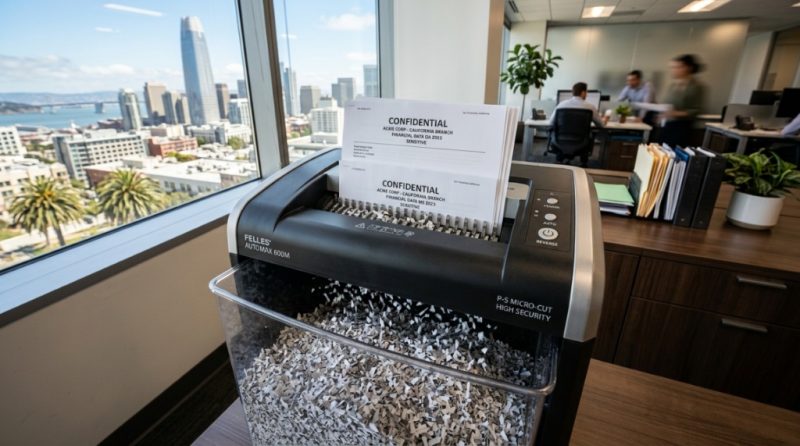
Living in California means navigating a patchwork of the nation’s strictest privacy laws. From the California Consumer Privacy Act (CCPA) to stringent medical record retention rules, businesses and individuals face serious consequences if sensitive data falls into the wrong hands.
You know you need more than a basic strip-cut machine for confidential client files, legal documents, or old tax records. The real challenge is locating a machine that meets official security standards, fits your budget, and delivers the reliability necessary for demanding shredding tasks. This guide cuts through the noise, offering a clear, actionable path to finding the right high-security paper shredders California professionals trust to stay compliant and secure.
What Exactly Defines a High-Security Paper Shredder?
A true high-security shredder is not simply a faster or bigger office model. It is an officially rated destruction device that reduces paper to tiny, unreconstructable particles. These machines meet strict international standards, such as the German DIN 66399 standard, specifically security levels P-5, P-6, or P-7. This level of security is essential for government agencies, defense contractors, and any business handling data subject to privacy regulations like HIPAA or the CCPA.
Understanding DIN 66399 Security Levels
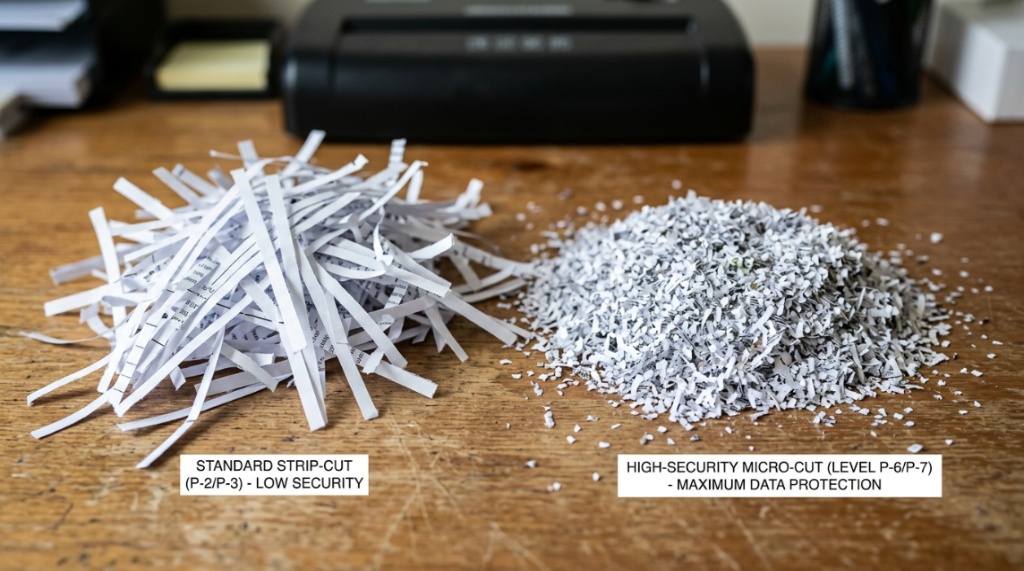
To find a genuine high-security machine, you must understand the rating system. A standard office shredder typically operates at P-2 or P-3, producing 4mm strips or small rectangles. High-security units start at P-5, which creates particles up to 15 square millimeters. P-6 and P-7 levels produce even smaller particles, often requiring cross-cut or micro-cut technology to render documents completely illegible and impossible to reassemble.
Key Differences from Standard Office Shredders
Standard shredders are designed for convenience, not absolute security. They often overheat after a few minutes of use and lack the robust cutting cylinders needed for continuous destruction. High-security models, however, feature hardened steel blades, powerful motors, and advanced jam-proof systems. They are built to run for extended periods, handling larger loads of paper, staples, and even credit cards without compromising particle size.
Examples of High-Security Documents
You need a high-security shredder for documents that could cause significant financial or reputational damage if exposed. Common examples include legal case files with client identities, medical records with protected health information (PHI), classified business contracts, and accounting records containing transaction details. Any document subject to a data breach notification law in California requires this level of protection.
Why Do California Businesses Need High-Security Shredders Specifically?

California leads the nation with some of the most aggressive consumer privacy protections. The CCPA grants individuals the right to sue businesses for data breaches resulting from a failure to implement reasonable security measures. Using a low-security shredder is no longer an acceptable defense. A documented policy using P-5 or higher shredders demonstrates a proactive approach to data stewardship, directly mitigating legal and financial risks.
Navigating CCPA and HIPAA Compliance
The CCPA requires businesses to implement reasonable security procedures. While it does not dictate a specific shredder level, industry best practices and legal precedents point to high-security destruction as the standard for sensitive information. For healthcare providers or business associates covered by HIPAA, the rules are even clearer. The HIPAA Security Rule demands proper disposal of PHI, and a high-security cross-cut or micro-cut shredder is the de facto standard for physical document destruction.
Risks of Non-Compliance in California
The penalties for failing to protect sensitive data can be severe. Businesses face fines from regulatory bodies, potentially reaching hundreds of thousands of dollars. Beyond fines, the risk of civil lawsuits from affected individuals is significant in California. A data breach from improperly shredded documents can also destroy customer trust, leading to lost revenue and a damaged brand reputation that takes years to rebuild.
Legal Requirements for Document Retention and Destruction
California law mandates specific retention periods for different document types. For example, payroll records must be kept for three years, while certain tax documents may need to be retained longer. Once the retention period expires, the law requires secure destruction. Using a high-security shredder provides a clear, auditable process for meeting these legal obligations, proving that documents were destroyed in a manner that renders them unreadable and unreconstructable.
How Do You Choose the Right Shredder for Your Volume?
Selecting the right machine starts with honestly evaluating your daily shredding volume. A machine designed for a small home office will fail spectacularly in a busy real estate or legal office. Matching the shredder’s duty cycle and sheet capacity to your workload prevents downtime, overheating, and premature wear. You need to consider both how many sheets you shred at once and how many minutes the machine can run continuously.
Sheet Capacity vs. Run Time
Sheet capacity indicates how many sheets the machine can handle at one time. High-security models typically have lower sheet capacities than standard models due to the increased force required for micro-cutting. A P-6 machine might handle 6 to 10 sheets per pass. Run time describes how many minutes the machine can operate before needing a cool-down period. For an office with steady traffic, look for units with a run time of 30 minutes or more to avoid frustrating interruptions.
Duty Cycle: Continuous vs. Intermittent Use
The duty cycle is the ratio of run time to cool-down time. An intermittent duty cycle of 5 minutes on and 30 minutes off is fine for a home office. For a busy California office, you need a continuous or heavy-duty cycle. Search for machines with a duty cycle of 75% or higher, meaning they can run for 45 minutes in a 60-minute window. This ensures productivity remains high during end-of-month or quarterly document purges.
Considerations for High-Volume Offices
If your office processes hundreds of pounds of paper weekly, consider a cabinet-style or industrial machine. These units have larger waste bins, more powerful motors, and longer run times. Some models feature auto-oiling systems that reduce maintenance needs. You might also explore centralized shredding stations with conveyor feeds for bulk destruction. These options are more expensive but offer significantly lower cost of ownership over time due to reduced labor and machine wear.
Where Can You Buy High-Security Shredders in California?
You have several options for purchasing a high-security shredder in California, ranging from large online retailers to specialized local office equipment dealers. Each channel offers distinct advantages. Online marketplaces provide vast selection and competitive pricing, while local dealers offer hands-on demonstrations, installation, and ongoing service agreements. Your choice depends on your need for immediate support versus lowest upfront cost.
Specialized Office Equipment Dealers
Working with a local authorized dealer is often the best approach for high-security equipment. These dealers are certified by manufacturers like Dahle, HSM, Fellowes, and Intimus. They can demonstrate machines, help you test them with your specific documents, and provide on-site warranty service. In California, cities like Los Angeles, San Francisco, San Diego, and Sacramento have multiple dealers who understand local compliance requirements and can recommend the best high-security paper shredders California offices use to meet regulatory standards.
Online vs. Local Purchasing
Buying online offers convenience and often lower prices, but it comes with risks. You cannot test the machine’s noise level or particle quality before purchase. Returns can be difficult for large, heavy equipment. Local purchasing, while potentially more expensive, allows you to see the machine in action, negotiate a service contract, and establish a relationship with a technician who can perform repairs quickly. For high-security needs, the peace of mind from a local warranty is valuable.
Leasing vs. Buying Options
For high-volume operations, leasing a high-security shredder can be advantageous. Leasing converts a large capital expense into a predictable monthly operating cost. It often includes maintenance and replacement parts. Buying is better if you plan to use the machine for five years or more and have the budget for upfront payment. Many dealers in California offer both options, so ask for a cost comparison over a three- to five-year period.
Which Features Are Critical for Security and Efficiency?
Not all high-security shredders are created equal. Beyond the security level, certain features dramatically affect usability, safety, and long-term reliability. Focusing solely on the particle size without considering these features can lead to frustrating daily use. You need a machine that is both secure and easy to operate, minimizing the risk of injury or downtime.
Auto-Reverse and Jam Prevention
Jams are the enemy of productivity. High-security machines often feature auto-reverse systems that detect overloads and reverse the cutting cylinder to clear the jam. Some models have advanced jam prevention technology that monitors paper thickness and slows the feed before a jam occurs. These systems protect the cutting blades from damage and reduce the time spent clearing obstructions, which is critical in a busy office environment.
Safety Features: Safety Locks and Sensors
High-security shredders are powerful machines. Safety features are non-negotiable. Look for units with safety locks that require a key to operate, preventing unauthorized use. Advanced models include infrared sensors in the feed opening that stop the blades immediately if a hand gets too close. These sensors are essential for offices where employees might be distracted or where children could potentially access the machine.
Auto-Oiling and Maintenance Systems
Regular oiling keeps cutting cylinders sharp and extends the shredder’s life. High-security machines often have automatic oiling systems that dispense the correct amount of oil at set intervals. This removes the burden of manual maintenance and ensures consistent performance. For heavy-volume shredders, this feature alone can save hours of labor per year and prevent costly repairs from neglected lubrication.
How to Verify a Shredder Meets Official Standards
Do not rely on marketing claims alone. Verifying a shredder’s security level requires checking for official certifications and independent testing. Many machines are advertised as “high-security” but only meet P-4 or P-5 standards. You must confirm the DIN level and ensure the machine’s particle size matches your required security threshold for documents like classified materials or medical records. When upgrading your workplace security protocols, choosing the right equipment is vital. Implementing heavy-duty Office Paper Shredders Protect Sensitive Business Documents from data breaches while ensuring your company remains fully compliant with strict California state privacy regulations.
Checking for Independent Certification Marks
Look for certification marks from independent testing organizations. The most common is the DIN 66399 certification, which includes a specific numeric level (e.g., P-5, P-6, P-7). Reputable manufacturers display this certification clearly on their product pages and packaging. If the certification is absent or vague, treat the claim with skepticism. You can also check publications from security industry groups that maintain lists of approved shredding equipment.
Understanding Particle Size Measurements
Certification is expressed in specific particle dimensions. A P-5 shredder creates particles no larger than 15 square millimeters, often in a strip width of 0.8mm or less. P-6 particles are smaller, under 10 square millimeters. P-7 is the highest level, with particles under 5 square millimeters. When comparing machines, look up the exact particle width and length. A machine claiming P-5 should have published specifications that match the DIN standard.
Common Misconceptions About High-Security Labels
A common myth is that any cross-cut shredder is “high-security.” Many commercial cross-cut shredders only achieve P-3 or P-4 levels, which are insufficient for official high-security requirements. Another misconception is that micro-cut is the same as high-security. Micro-cut is a marketing term that often describes a P-4 or P-5 machine. Always confirm the actual DIN level and particle size rather than relying on descriptive terms like “micro-cut” or “ultra-secure.”
What Are the Top Brands Trusted by Professionals?
Several manufacturers have earned reputations for building reliable, durable high-security shredders. These brands invest heavily in engineering, testing, and certification. Choosing a trusted brand reduces the risk of breakdowns and ensures replacement parts are available. While lesser-known brands may offer lower prices, the cost of downtime and poor customer support in a crisis often outweighs the initial savings.
Dahle and HSM for German Engineering
German brands like Dahle and HSM are considered industry leaders in high-security shredding. Their machines are known for exceptional build quality, quiet operation, and long service life. Dahle’s Vantage series and HSM’s SECURIO series include models rated P-5 and higher. These machines often feature advanced safety systems and heavy-duty cutting cylinders. They are a top choice for government and legal offices in California that require uncompromising reliability.
Intimus and Fellowes for Professional Offices
Intimus specializes in document security and offers a wide range of high-security machines suitable for corporate environments. Their machines often come with extended warranties and comprehensive maintenance plans. Fellowes, while known for home and small office shredders, also produces a professional line with P-5 and P-6 ratings. Their C-series and AutoMax lines include high-security options trusted by mid-sized businesses for their user-friendly designs and robust warranty support.
Can You Rent or Lease High-Security Shredders?
Yes, renting or leasing is a practical option for short-term projects, seasonal needs, or companies that prefer predictable monthly costs. This approach is especially popular for document destruction events, office relocations, or end-of-year financial cleanups. Renting avoids a large capital outlay and transfers maintenance responsibility to the rental company.
Short-Term Rentals for Projects
If you have a one-time project requiring secure destruction of a large document backlog, a short-term rental may be the most cost-effective solution. Many office equipment dealers in California offer weekly or monthly rentals on high-security machines. This allows you to use a P-6 or P-7 machine for a few days without committing to a purchase. Ensure the rental includes delivery, setup, and pickup to avoid logistical headaches.
Long-Term Leases with Maintenance Included
For ongoing needs, a long-term lease (12 to 36 months) often includes full maintenance, repairs, and replacement parts. This is ideal for businesses that cannot afford unexpected repair bills. A lease also allows you to upgrade to a newer model at the end of the term. When negotiating a lease, ask about the duty cycle guarantee and the response time for service calls, as minimizing downtime is critical.
How to Properly Maintain Your High-Security Shredder
Proper maintenance is essential for preserving the security level and extending the life of your machine. High-security shredders have tighter tolerances than standard models, making them more sensitive to debris, dust, and lack of lubrication. A neglected machine produces larger particles, compromising security and increasing the risk of jams or motor failure.
Daily and Weekly Maintenance Tasks
Daily maintenance involves emptying the waste bin before it becomes completely full, as overfilling can cause jams. Remove any visible debris from the feed opening with a soft brush. Weekly, run a few sheets of shredder oil across the cutting cylinders to maintain lubrication. For models with manual oiling, this step is crucial. Clean the exterior with a damp cloth to prevent dust buildup that can clog vents and cause overheating.
When to Sharpen or Replace Blades
Even premium blades dull over time. Signs of dull blades include increased noise, slower shredding speed, and particles that are visibly larger than the specified size. Some high-end machines have self-sharpening blades, but most will eventually need professional sharpening or replacement. Schedule annual inspections with a certified technician to evaluate blade condition. Replacing blades proactively prevents them from tearing paper rather than cutting it cleanly.
Conclusion
Protecting sensitive data is not just a good practice in California; it is a legal and financial necessity. Finding the right high-security paper shredder begins with understanding your specific security needs, your daily volume, and the regulatory environment you operate in. From verifying DIN 66399 certifications to choosing between local dealers and online purchases, every decision affects your compliance posture and operational efficiency. By prioritizing certified machines with proven features and a reliable support network, you can confidently destroy documents, knowing you have met the highest standards for data security. Take the first step today by evaluating your current shredding practices and committing to a solution that truly protects your business and your clients.
Frequently Asked Questions
What is the difference between a cross-cut and a micro-cut shredder?
A cross-cut shredder cuts paper into small rectangles, typically at a P-3 or P-4 security level. A micro-cut shredder cuts paper into even smaller particles, often achieving a P-5 or higher level. Micro-cut is the standard for high-security applications because the particles are too small to be reassembled.
Can I shred credit cards or CDs in a high-security shredder?
Many high-security shredders are designed to handle credit cards and CDs in addition to paper. However, you must check the manufacturer’s specifications. Some machines have separate feed slots for these materials. Shredding credit cards in a machine not designed for them can damage the blades.
How often should I oil my high-security shredder?
For manual oiling, oil your shredder every time you empty the waste bin, or after every 30 minutes of continuous use. For machines with auto-oiling systems, ensure the reservoir is filled as recommended by the manufacturer. Regular lubrication prevents jams and extends blade life.
Do I need a P-7 shredder for all confidential documents?
No, a P-7 shredder is typically reserved for top-secret government or military documents. For most businesses, a P-5 or P-6 machine provides sufficient security for CCPA, HIPAA, and GDPR compliance. Evaluate the sensitivity of your documents and choose the level that matches your risk profile.
What should I do if my shredder stops working?
First, check the safety switch and ensure the waste bin is properly inserted. Clear any visible jams by reversing the machine. If the motor has overheated, allow it to cool for the recommended time. If these steps fail, contact a certified technician through your dealer or warranty service provider.
Are used high-security shredders a good value?
Used machines can be a good value if they have been properly maintained and serviced. However, ensure the blades are still sharp and the motor has not been overworked. Request a maintenance history and a demonstration of the particle size before purchasing. Be wary of units that show signs of heavy wear or rust.
Can I outsource shredding instead of buying a machine?
Yes, professional shredding services are available in California. They pick up your documents, shred them at a secure facility, and provide a certificate of destruction. This option eliminates maintenance and capital costs but requires strict chain-of-custody procedures and scheduling flexibility.
