
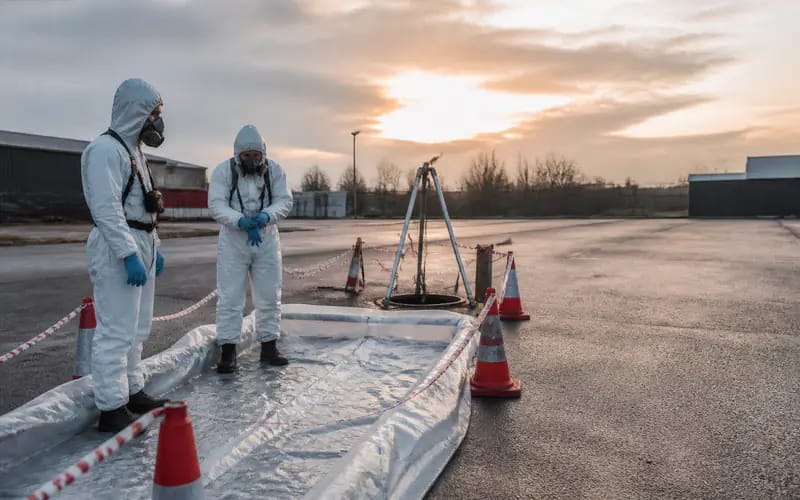
Getting the casualty out of the confined space is only half the job. The next few minutes are critical in deciding whether contamination is contained to the casualty, the rescue team and site or not.
Set Up Your Zones First
Clearly define a hot zone (contaminated), a warm zone (where decontamination takes place) and a cold zone (clean). The zones must be separated to prevent the rescuer’s clean kit and clean hands to come into contact with contaminated ground.
Decontaminate the Casualty First
Start gross decontamination as soon as possible. Clean as much of the contamination off the casualty’s clothing and skin as possible before starting medical treatment. Cut clothing off at collar, wrists and ankles to prevent soiling beneath clothing rather than removing clothing over their head.
Doff PPE in the Right Order
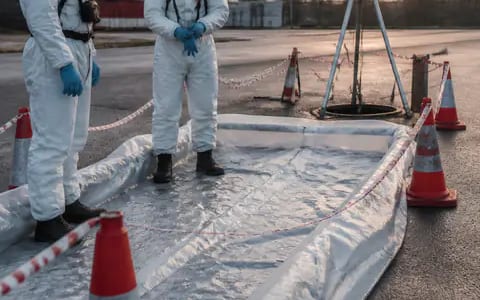
Decontamination also applies to the rescuer. He or she must remove outer gloves first, followed by the breathing apparatus, and then the entire suit. The hands and face must be washed as soon as possible after removal of the suit to prevent transfer of contamination to other parts of the body or clothing. For Confined Space Rescue, see https://www.agofirerescue.com/confined-space-rescue/.
Bag and Label Everything
All soiled clothing, used PPE and waste water from the decontamination process must be disposed of in a hazardous waste bin and be labelled accordingly. Reference should be made to the COSHH: A Code of Practice for the Control of Substances Hazardous to Health guidance on the storage and disposal of substances hazardous to health.
Check for Exposure Afterwards
Even though the person affected seems to be fine, everyone involved in the rescue should be checked for exposure to a chemical, biological agent or toxic gas. Some of these substances can cause delayed effects which may take hours or even days to develop. It is best to check for these as quickly as possible.
Clean Equipment Before Reuse
Harnesses, ropes and other items used in the rescue should be cleaned and checked for reuse prior to being put back in the respective equipment bag. Equipment that is damaged or contaminated in a major way should be taken out of service.
A professional confined space rescue team will treat the decontamination of casualties and equipment as a key part of the overall rescue operation. Remember the decontamination sequence and protect all involved for the hours, days and even weeks after the incident.
