

In today’s digital age, many businesses assume that data security only concerns electronic files and computer systems. However, paper documents still pose significant risks when not properly disposed of. A single carelessly discarded document can expose confidential information, leading to identity theft, corporate espionage, or regulatory violations. This is where office paper shredders become essential tools for protecting your business.
Every organization handles sensitive information daily. Whether it’s employee records, financial statements, client contracts, or strategic plans, these documents contain data that competitors or criminals would love to access. Simply throwing papers in the trash isn’t enough. Dumpster diving remains a surprisingly common method for stealing business information. Therefore, implementing proper document destruction practices is crucial for maintaining security and compliance.
Understanding the Risks of Improper Document Disposal
Before investing in security measures, you should understand what’s at stake. When sensitive papers end up in regular waste bins, they become accessible to anyone willing to search through garbage. This might sound unlikely, but it happens more often than most business owners realize.
Identity thieves frequently target businesses because companies often discard documents containing Social Security numbers, banking details, and personal information about employees or customers. One stolen document can provide enough information to open fraudulent accounts or commit other crimes. Your business could face lawsuits, fines, and severe reputation damage as a result.
Additionally, competitors may seek proprietary information about your pricing strategies, client lists, or upcoming product launches. Industrial espionage isn’t limited to major corporations. Small and medium-sized businesses also possess valuable information that rivals would exploit if given the opportunity.
Regulatory compliance adds another layer of concern. Various laws require businesses to protect personal information properly. The Health Insurance Portability and Accountability Act mandates secure disposal of medical records. The Fair and Accurate Credit Transactions Act requires destruction of consumer information. Gramm-Leach-Bliley Act covers financial institutions. Violating these regulations results in substantial penalties.
How Paper Shredders Provide Essential Protection
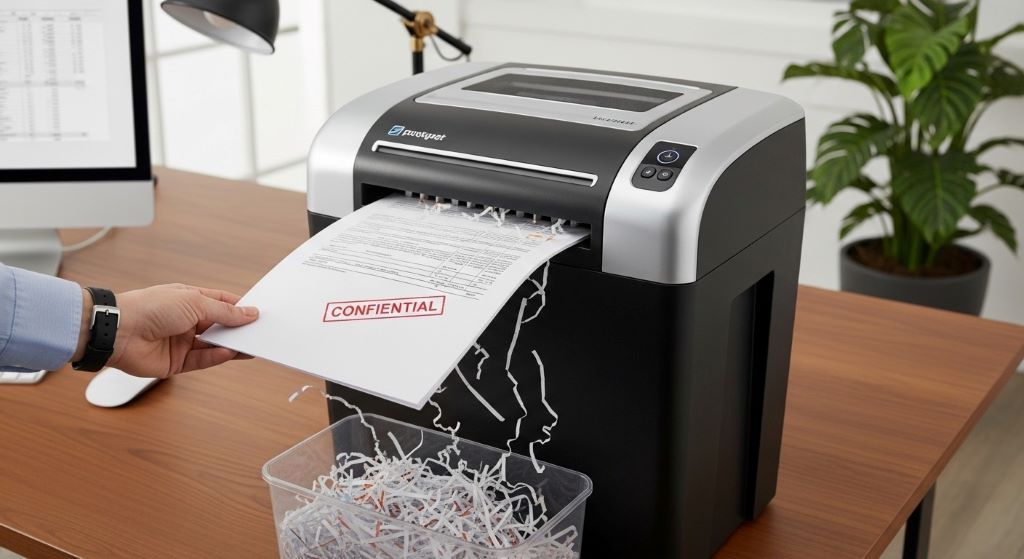
A shredder for office documents serves as your first line of defense against information theft. These machines transform readable papers into tiny pieces, making reconstruction virtually impossible. Modern shredders offer various security levels, each providing different degrees of protection based on your specific needs.
The simplest models create long strips from papers. While better than nothing, determined individuals can reassemble strip-cut documents with enough patience. More secure options use cross-cut technology, which slices papers both vertically and horizontally. This creates confetti-like pieces that are exponentially harder to reconstruct.
For organizations handling highly sensitive materials, micro-cut and super-micro-cut shredders provide maximum security. These machines produce particles so small that reassembly becomes practically impossible. Government agencies, legal firms, and healthcare facilities often choose these high-security options.
Beyond just cutting paper, many modern machines can destroy other materials containing sensitive information. Credit cards, CDs, DVDs, and identification badges can all be processed through appropriate models. This versatility makes them comprehensive solutions for complete information security.
Choosing the Right Shredder for Your Business Needs
Selecting an appropriate document shredder requires careful consideration of several factors. The volume of documents your organization processes daily should guide your decision. Small offices might manage with personal or small office models, while large corporations need heavy-duty industrial machines capable of continuous operation.
Security level represents another critical consideration. Think about the type of information you handle regularly. General business correspondence requires less security than financial records or legal documents. The DIN 66399 standard provides a useful framework for understanding security levels, ranging from P-1 (lowest) to P-7 (highest).
Sheet capacity determines how many papers you can shred simultaneously. Higher capacity means faster processing and improved efficiency. However, overloading any machine causes jams and potential damage. Always respect manufacturer guidelines regarding capacity limits.
Run time and cool-down periods matter significantly for busy offices. Some shredders can operate continuously for extended periods, while others need frequent breaks to prevent overheating. If your office generates substantial amounts of waste paper daily, invest in a model designed for heavy use.
Maintenance requirements vary between models. Some machines need regular oiling to maintain optimal performance, while others feature automatic oiling systems. Consider whether your staff will remember to perform regular maintenance or if a self-maintaining model makes more sense.
Noise levels might seem trivial until you place a loud shredder in a quiet office environment. Look for models specifically designed for quiet operation if noise could disrupt your workplace.
Implementing Effective Shredding Policies
Purchasing equipment represents just the first step. Establishing clear policies ensures everyone understands what should be shredded and when. Create a comprehensive list of document types requiring destruction. This might include drafts, outdated records, duplicate copies, and expired contracts.
Designate specific locations for shredding within your office. Placing machines in convenient spots increases compliance. If employees must walk across the building to shred documents, they’re more likely to skip this important step.
Training staff on proper usage prevents damage to equipment and ensures maximum security. Teach employees to remove staples and paper clips before shredding, recognize jam warnings, and understand capacity limits. Regular refresher training helps maintain good habits.
Consider implementing a clean desk policy requiring employees to shred unnecessary documents at the end of each day. This prevents sensitive papers from sitting on desks overnight where cleaning crews or unauthorized personnel might see them.
For extremely confidential materials, establish a chain of custody protocol. Some organizations use locked bins for collecting documents throughout the day, with designated personnel performing the actual shredding. This ensures that highly sensitive materials receive appropriate handling from creation to destruction.
Benefits Beyond Security
While protection of sensitive information remains the primary purpose, shredders offer additional advantages. They contribute to environmental sustainability when combined with recycling programs. Shredded paper can be recycled into new products, reducing your business’s environmental footprint.
Many recycling facilities actually prefer receiving shredded paper because it’s already processed into smaller pieces. Just ensure your shredder produces particles large enough for recycling. Extremely fine cuts sometimes create challenges for recycling operations.
Space savings provide another benefit. Shredded paper compresses significantly compared to whole sheets. This means fewer trips to disposal bins and reduced waste management costs. Some organizations report cutting their paper waste volume by more than half through shredding.
Cost savings emerge over time as well. While purchasing quality equipment requires upfront investment, avoiding a single data breach typically justifies the expense many times over. The average cost of a data breach continues rising each year, with small businesses often suffering the most severe impacts.
Mobile Shredding Services as an Alternative
Some businesses choose professional mobile shredding services instead of maintaining in-house equipment. These services bring industrial shredders to your location, destroying large volumes of documents efficiently. This option works well for organizations with periodic purges of archived materials.
However, for daily operations, having on-site equipment provides more convenience and immediate security. Rather than collecting sensitive documents over days or weeks until a service visit, you can destroy them immediately. This reduces the window of vulnerability.
Many businesses use a hybrid approach, maintaining office shredders for daily use while scheduling periodic visits from professional services for archive purges or large-scale cleanouts. This combination provides both convenience and cost-effectiveness.
The Role of Digital Security
Modern businesses must protect both physical and digital information. While shredders handle paper documents, complementary measures address electronic data. Encryption, secure passwords, and proper disposal of electronic devices all contribute to comprehensive security.
Interestingly, many data breaches actually begin with physical documents rather than digital hacking. Therefore, neglecting paper security while focusing solely on cybersecurity leaves significant vulnerabilities. A balanced approach addressing both domains provides the most robust protection.
Some organizations are moving toward paperless operations to reduce security risks. While this eliminates many concerns about physical documents, it doesn’t completely solve the problem. Printers still produce occasional papers, and external parties still send physical mail. Consequently, shredders remain relevant even in largely digital environments.
Building a Culture of Security Awareness
Technology alone cannot ensure security. Human behavior determines whether safeguards succeed or fail. Building awareness among employees about why document security matters increases compliance with shredding policies.
Share real examples of how careless document disposal has harmed other businesses. When people understand the actual consequences rather than viewing security as abstract rules, they’re more likely to follow procedures consistently.
Recognize and reward good security practices. Acknowledging employees who consistently follow protocols encourages others to do the same. Conversely, address violations promptly and clearly to prevent bad habits from spreading.
Make security part of your company culture from day one. Include document handling procedures in new employee orientation. Revisit these topics regularly in staff meetings. When leadership demonstrates commitment to security, employees naturally follow that example.
Conclusion
Protecting sensitive business documents requires more than good intentions. It demands concrete actions and appropriate tools. Office paper shredders serve as essential equipment for any organization handling confidential information. They prevent identity theft, protect proprietary data, ensure regulatory compliance, and safeguard your business reputation.
Choosing the right equipment involves considering your specific needs, including document volume, required security level, and operational requirements. Equally important is implementing clear policies and fostering a culture where everyone understands their role in maintaining security. Combined with proper training and consistent enforcement, shredders become powerful tools for protecting what matters most to your business.
The relatively small investment in quality shredding equipment pays enormous dividends by preventing potentially catastrophic data breaches. In an era where information represents one of your most valuable assets, protecting it should be a top priority. Don’t wait until after a security incident to take action. Implement robust document destruction practices today to safeguard your business tomorrow.
Frequently Asked Questions
What security level shredder do I need for my business?
The appropriate security level depends on the sensitivity of your documents. For general business papers, a cross-cut shredder (P-3 or P-4 security level) provides adequate protection. Financial institutions, healthcare providers, and legal firms should consider micro-cut models (P-5 or higher) for maximum security. Assess what information you handle regularly and choose accordingly.
How often should I replace my office shredder?
Quality shredders typically last five to ten years with proper maintenance. However, replacement timing depends on usage intensity and maintenance practices. If your machine frequently jams, makes unusual noises, or fails to shred completely, consider replacement. Regular servicing extends lifespan significantly.
Can shredded paper be recycled?
Yes, most shredded paper can be recycled. However, check with your local recycling facility about their requirements. Some facilities cannot process very fine particles from micro-cut shredders. Place shredded paper in clear bags or designated containers to help recycling centers process it properly.
What documents should always be shredded?
Always shred documents containing Social Security numbers, financial account information, medical records, employee personnel files, client contracts, proprietary business information, and anything with signatures. When in doubt, shred it. The minimal cost of destroying unnecessary documents far outweighs the risk of exposing sensitive information.
Do I need a shredder if my office is mostly paperless?
Even predominantly digital offices benefit from having a shredder available. You’ll occasionally print documents, receive physical mail, or need to dispose of old files. Additionally, some materials like expired credit cards or identification badges require physical destruction. A small capacity model handles occasional needs effectively.
Related Topics:
How to start a credit repair business?
Best business to start with little money and get enough profit
