
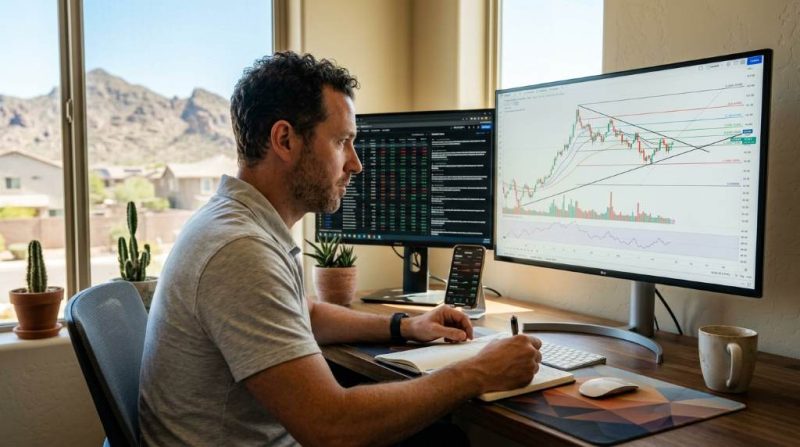
Phoenix has become one of the fastest growing business hubs in the Southwest, and many residents now explore swing trading as a side income stream. Recent market studies show that retail trading participation in the United States increased by more than 25% over the past few years. At the same time, TradingView continues to attract millions of active users because of its free charting tools and community features. Many local traders also use tools to backtest trading strategies for free before risking money in live markets. This process helps Phoenix traders create disciplined setups while managing risk in a highly active market environment.
Why Swing Trading Fits the Phoenix Lifestyle
Phoenix residents often balance demanding schedules with flexible income goals. Swing trading works well because traders can analyze charts after work without watching the market all day. Many professionals in Phoenix prefer trades that last several days instead of constant intraday activity. As a result, TradingView becomes a practical solution for traders who need efficiency and simplicity.
Arizona’s hot climate also shapes local routines and productivity patterns. During summer afternoons, many traders stay indoors because temperatures regularly exceed 110 degrees Fahrenheit. Therefore, evening chart analysis becomes a common habit for swing traders across Phoenix suburbs. Many traders also follow smart part time trading methods to stay consistent without sacrificing their primary careers.
Swing traders in Phoenix also benefit from strong internet infrastructure and a growing remote work culture. Because many residents already work from home, chart analysis naturally fits into daily routines. Furthermore, traders can use free TradingView alerts to monitor opportunities while handling other responsibilities. This flexibility helps traders avoid emotional decisions caused by overtrading.
How Free TradingView Features Support Winning Setups
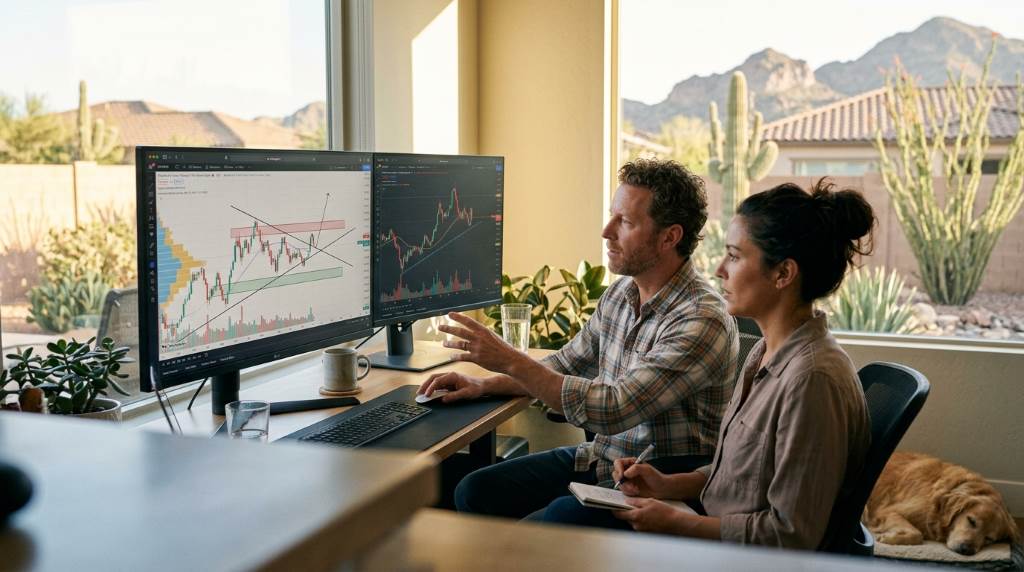
TradingView offers several free tools that help traders identify trends, manage entries, and reduce emotional mistakes. Unlike expensive trading platforms, the free version still provides enough features for disciplined swing trading. Many Phoenix traders focus more on consistency than on premium subscriptions. Consequently, they rely on efficient chart setups instead of complicated software.
One of the most useful free features is the multi time frame chart view. Traders often check daily charts for the primary trend and four hour charts for entries. This process helps traders avoid entering against market momentum. In addition, Phoenix traders often combine chart structure with market profiling techniques to better understand sector behavior and stock performance.
Another powerful feature involves customizable watchlists. Traders can group stocks based on sectors, volatility, or earnings schedules. This organization saves time and reduces unnecessary chart scanning during busy weekdays. Many experienced traders in Phoenix review only a small number of quality setups each evening.
TradingView also allows traders to save chart layouts. This feature helps maintain consistency because traders use the same indicators and visual structure every session. Consistency matters because changing setups too often creates confusion and weakens discipline. Therefore, many profitable swing traders keep simple chart templates for months.
Building a Winning Swing Trading Setup in Phoenix
Start With Trend Direction
Successful swing traders first identify the dominant market direction before searching for entries. Most Phoenix traders prefer stocks above the 50 day moving average because those stocks often show stronger momentum. Additionally, trending markets reduce emotional stress because traders follow established movement. This approach also limits random countertrend trades.
Many traders use TradingView moving averages to confirm trend alignment quickly. A common method involves checking whether the 20 day moving average stays above the 50 day moving average. When both averages rise together, traders look for pullbacks instead of chasing breakouts. This method keeps entries more controlled and strategic.
Use Support and Resistance Zones
Support and resistance zones remain essential for swing trading success. Phoenix traders often draw horizontal levels on daily charts before the market opens. These levels highlight areas where buyers or sellers previously controlled price movement. Consequently, traders can plan entries with clearer risk management.
TradingView provides simple drawing tools that make chart analysis fast and organized. Many traders color code support and resistance zones for quick recognition. Some traders also combine volume analysis with these zones for added confirmation. This process increases confidence before entering a position.
Focus on Volume Confirmation
Volume reveals whether institutional traders support a market move. Experienced swing traders in Phoenix avoid setups with weak volume because those moves often fail quickly. Instead, they look for breakouts supported by rising participation. Higher volume usually signals stronger conviction from larger market players.
TradingView includes free volume indicators that help traders confirm momentum shifts. Many Phoenix traders compare current volume against the previous ten trading sessions. If volume expands significantly during a breakout, traders often consider the move more reliable. This filter removes many low quality trades from watchlists.
The Uncommon Strategy Many Phoenix Traders Use
One uncommon strategy among Phoenix swing traders involves using seasonal heat patterns to improve trading routines. During extreme summer temperatures, many traders avoid midday distractions and focus on structured evening analysis sessions. This routine creates more disciplined chart review habits compared to constant daytime monitoring. Surprisingly, many traders report better decision making because of this environmental adjustment.
Some Phoenix traders also use electricity demand trends as a market observation tool. Arizona utility companies often experience increased attention during intense summer months due to rising energy consumption. Therefore, traders monitor utility related stocks for potential momentum swings during heat waves. This local awareness creates opportunities that traders outside Arizona may overlook.
Another uncommon practice involves tracking tourism and real estate activity in Phoenix suburbs. Swing traders sometimes watch regional business growth indicators to identify broader sector trends. Because Phoenix continues expanding rapidly, traders often study construction, housing, and infrastructure related stocks. This local market awareness adds context to technical analysis.
How Phoenix Traders Manage Risk Using TradingView
Setting Smart Alerts
TradingView alerts help traders avoid emotional reactions during market hours. Instead of staring at charts continuously, Phoenix traders set price alerts near important support and resistance levels. This process saves time and improves focus throughout the workday. As a result, traders make decisions based on planning rather than panic.
Many traders use alerts before major Federal Reserve announcements or earnings reports. Market volatility often increases during these events, especially in technology and growth sectors. Therefore, alerts provide an organized way to monitor sudden price movement. This feature becomes especially useful for traders managing full time careers.
Keeping Risk Small
Most profitable swing traders risk only a small percentage of their account on each trade. Phoenix traders commonly limit risk to one or two percent per position. This discipline protects capital during losing streaks and keeps emotions under control. Long term consistency matters more than one large winning trade.
TradingView chart tools make stop loss placement much easier. Traders can visually measure entry points, stop levels, and profit targets before entering a trade. This preparation improves confidence and removes impulsive decisions. Consequently, traders follow their plans more consistently.
Best Free Indicators for Swing Traders in Phoenix
Relative Strength Index
The Relative Strength Index helps traders identify overbought and oversold conditions. Many Phoenix swing traders use this indicator to find pullbacks within strong trends. Instead of buying extended moves, traders wait for healthier retracements. This method improves risk to reward potential.
RSI also helps traders avoid emotional entries after sudden price spikes. When the indicator moves above extreme levels, traders often wait for confirmation before entering new positions. Patience becomes especially important during volatile market conditions. Therefore, RSI remains a valuable free TradingView tool.
Volume Weighted Average Price
Volume Weighted Average Price, often called VWAP, helps traders understand average market pricing. Phoenix traders frequently use VWAP to identify whether institutions support a trend. If price stays above VWAP during a breakout, traders often view the setup positively. This confirmation adds another layer of confidence.
VWAP also supports better entry timing during pullbacks. Instead of chasing price movement, traders wait for controlled retracements toward the indicator. This approach improves trade location and reduces unnecessary risk. As a result, many swing traders rely on VWAP daily.
Moving Average Convergence Divergence
MACD remains popular among swing traders because it highlights momentum shifts clearly. Many Phoenix traders combine MACD crossovers with support and resistance zones for confirmation. This combination creates more structured setups with better timing. Furthermore, MACD works well across stocks, ETFs, and forex pairs.
TradingView allows traders to customize MACD settings easily. Some traders prefer faster signals while others focus on smoother momentum trends. Flexibility helps traders adapt strategies to different market conditions. Therefore, MACD continues to be one of the most used free indicators.
How Community Features Improve Trading Skills
TradingView includes a large social community where traders share ideas and chart analysis. Many Phoenix traders use these public charts to compare market perspectives before placing trades. Reviewing different viewpoints often reveals blind spots or missed opportunities. Consequently, traders improve their analytical skills over time.
However, experienced traders avoid copying random trade ideas without research. Instead, they use community charts as educational references rather than trading signals. This balanced approach protects traders from emotional crowd behavior. Independent analysis always remains the priority.
Some Phoenix traders also publish their own setups publicly for accountability. Sharing charts encourages discipline because traders must explain their reasoning clearly. Over time, this habit improves consistency and strategic thinking. It also creates networking opportunities with other traders across Arizona.
Creating a Daily Swing Trading Routine
A structured routine often separates profitable traders from inconsistent traders. Many Phoenix swing traders review economic calendars before analyzing charts each evening. This process helps traders avoid unexpected volatility around major announcements. Preparation creates a calmer trading mindset.
Most successful traders also keep watchlists small and focused. Instead of scanning hundreds of stocks, they monitor a limited group of quality setups. This strategy improves concentration and reduces decision fatigue. Therefore, traders spend more time analyzing high probability opportunities.
Journaling also plays an important role in swing trading growth. Many Phoenix traders record entries, exits, emotional reactions, and market conditions after every trade. This habit reveals recurring mistakes and successful patterns over time. Additionally, traders can refine strategies more efficiently using detailed records.
Some traders even connect financial discipline with broader business planning principles. Understanding personal credit management and funding strategies often improves risk awareness in trading. Many professionals explore strong financial credibility habits because disciplined money management supports long term investment decisions.
Common Mistakes Phoenix Swing Traders Avoid
One common mistake involves overcomplicating chart analysis with too many indicators. Many beginners add several tools that provide conflicting signals and increase confusion. Experienced Phoenix traders usually focus on price action, volume, and trend structure instead. Simplicity often produces more consistent decisions.
Another major mistake involves trading during emotional stress or exhaustion. Phoenix summers can create physical fatigue because of extreme heat conditions and long workdays. Therefore, disciplined traders prioritize rest and avoid impulsive late night decisions. Mental clarity strongly influences trading performance.
Many traders also fail because they ignore risk management during winning streaks. Confidence sometimes encourages oversized positions and reckless entries. However, professional traders maintain consistent position sizing regardless of recent success. This discipline protects accounts during unexpected market reversals.
Conclusion
Swing traders in Phoenix, AZ continue finding success by combining disciplined routines with powerful free TradingView features. From trend analysis and alerts to community learning tools, traders can build structured setups without expensive software. Local habits, climate patterns, and business growth trends also create unique perspectives that strengthen market analysis. Traders who focus on consistency, patience, and risk control often achieve better long term results.
If you want to improve your swing trading process, start by mastering a few free TradingView features and building a repeatable routine. Study your results carefully, refine your strategy gradually, and stay disciplined during volatile conditions. Long term success comes from preparation rather than prediction. Take action today and begin creating smarter trading setups with confidence.
FAQs
Is TradingView free for swing traders?
Yes, TradingView offers several free charting tools and indicators that work well for swing trading.
What is the best indicator for beginner swing traders?
Many beginners start with moving averages because they clearly show trend direction.
How much time do swing traders spend daily?
Most swing traders spend one to two hours reviewing charts and managing positions.
Why do Phoenix traders prefer swing trading?
Swing trading fits flexible schedules and allows traders to analyze markets after work hours.
Can free TradingView tools support profitable trading?
Yes, disciplined traders often build profitable strategies using only free TradingView features.
