
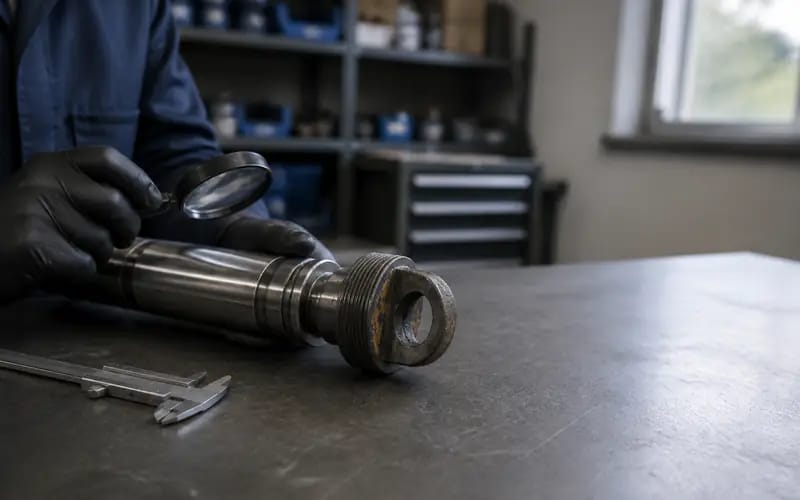
Even parts which have been worn so that chrome is worn from a chrome shaft or ram do not have to be scrapped as many parts can be cleaned and chrome re-plated. This process is described in full below.
Checking the Part First
To determine if a part can be re-plated for re-use, it is first necessary to inspect the worn part. For minor wear, the old plating can be stripped and new chrome plated onto the worn area. However, the part must not have suffered any cracks to the base metal or any deep pitting which may have penetrated the steel itself. Nor should there be excessive reduction in the base material thickness. Parts that have suffered such damage can only be cost effectively repaired by other means than re-chroming. The initial visual inspection of a worn part can be easily accomplished with the aid of a magnifying glass and callipers. However, a more accurate assessment of wear can be obtained by using a dial gauge to measure the wear flat to determine the extent of deviation from new.
Stripping the Old Chrome Layer
Reverse-current electrolytic stripping is the preferred method of removing chromium plating. However, certain parts such as in barrel plating cannot be stripped using reverse-current electrolytic methods. These parts are stripped using a suitable chemical solution that dissolves the chromium plating. The part is then cleaned of any residue and the underlying metal inspected for damage or corrosion.
Repairing the Bare Metal
When stripping back worn parts for re-chroming, areas of pitting or mild corrosion can be present in the bare metal. The chrome plating may have been hiding these minor problems but, once exposed, they have to be removed prior to commencing the re-chroming process by grinding or lapping the surface to remove pits etc. In some cases it may be necessary to build up the damaged area with weld or even form an intermediate metal layer which can then be machined to a true surface prior to commencing the re-chroming process.
Degreasing and Acid Cleaning
Prior to plating the degreasing and acid cleaning stages need to be completed in order to strip away any oils or cutting fluids from the part and to remove any light oxide film. This is an important step as any surface marks or oxide film will prevent a good key with the plating bath and result in the chrome layer blisters or flakes early. This process is managed within the workshop in accordance with health and safety guidance on managing chromium plating processes for UK industry. The same care must be taken when handling the chromium plating solutions within the plating bath.
Masking Features That Must Stay Bare
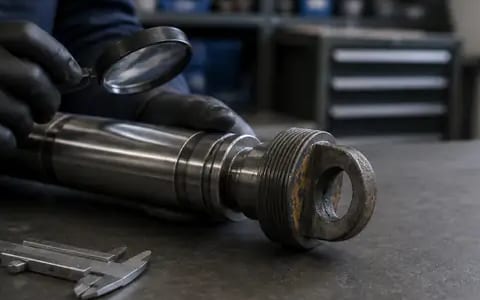
Threads, boreholes, keyways and any other features that must remain unchanged post-chroming are masked off prior to chroming using rubber bungs, lacquer or specialist plating tape. A good quality mask must be leak proof to prevent the mask leaking and parts being coated in unwanted areas that will require subsequent machining or even scrapping.
Activating the Surface
There is also a stage of activation of the surface prior to plating. This can be an electrochemical treatment which removes any passive oxide film from the surface of the metal and reveals a fresh clean surface for the plating to adhere to. This treatment has to be carried out immediately prior to plating as the surface will start to re-oxidise in the air within minutes.
Re-plating and Building Up Thickness
The part is then immersed in the chromium bath. The density of current and the bath temperature are both controlled to produce an even rate of deposit. This type of Hard Chrome Plating is used for wear resisting parts i.e. re-facing worn shafts, ram etc. and allows the lost diameter to be built up in controlled measurable layers of chromium instead of merely coating the surface. The thickness of the plating is measured during the plating process by means of test coupons, which are plated at the same time as the part being processed. In most cases the drawings for a part will specify a minimum and/or maximum thickness of the chromium with a corresponding finish requirement, which can be measured and referred against the British Standards for metal coatings i.e. BS 3354:1990 Chrome Plating. The chromium trioxide used in these baths is controlled by the REACH regulations on the use of hexavalent chromium and strict conditions must be adhered to by all platers.
Relief Baking and Final Checks
Hard chrome plating can cause hydrogen embrittlement in the parts that are being plated. The parts are therefore relieved of hydrogen embrittlement after the plating process by putting them in an oven for a number of hours at a certain temperature. After the plating process, the part is ground or polished to the required size. The part is then inspected for any pitting or burning and measured against the drawing to check for any other defects. The discharge from the stripping and cleaning processes must be managed under environmental permitting for plating processes for sites that are subject to such regulation.
Re-chromed parts should perform as well as new parts and for a lot less money than making a new part from raw material.
