
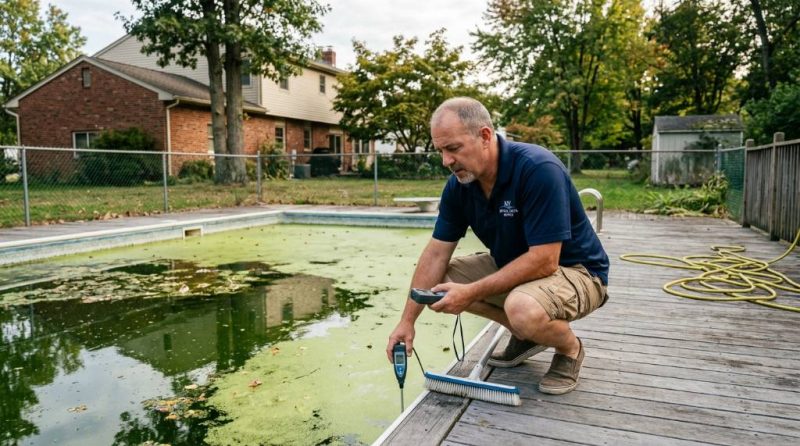
Late May in New York means pool season is short and the pressure to make every sunny weekend count is real. But between spring pollen dumps, summer algae blooms, and the constant shedding of trees like maples and oaks, a clean pool can feel more like a part-time job than a source of relaxation. If you’re dealing with recurring grime and aren’t sure where to start, a reliable BestVacuumCleaner.us guide on pool vacuums can help you match the tool to the mess. Here are the most common cleaning problems New York homeowners actually run into — and what to do about each one.
Quick Answer
New York pool owners most often battle algae blooms, pollen and fine debris, clogged filters, staining from leaves and mulch runoff, and weak suction from worn equipment. The biggest underlying causes are the region’s short season, heavy tree cover, and rapid temperature swings. Fixing these issues usually requires combining correct water chemistry with a vacuum and filter setup suited to a specific debris type, not just more chlorine.
Key Takeaways
- Most New York pool problems trace back to location — trees, pollen, and a short, intense season — rather than neglect alone.
- Algae, pollen, and heavy leaf debris each need different cleaning approaches, so a single routine rarely solves everything.
- Weak suction is usually a symptom of a worn vacuum, clogged line, or dirty filter — not the cleaner itself failing.
- Cleaning after storms and before extended closures prevents the most expensive problems.
- Matching the vacuum type to your debris profile saves more time than any chemical treatment alone.
Algae Blooms: The Most Persistent New York Problem
Algae is the number one complaint in New York because the conditions that grow it arrive fast. A stretch of humid, 85°F days can turn a clear pool green in under 72 hours, especially if the pool sat uncovered during a rainy week.
There are three types homeowners typically see:
- Green algae — floating, cloudy water that brushes off easily but returns quickly.
- Mustard algae — yellow-brown, clings to walls, and resists normal chlorine levels.
- Black algae — dark spots with deep roots in plaster, the hardest to fully remove.
Brushing alone won’t fix it. Algae needs three things removed together: the right chlorine level, proper filtration, and physical removal of dead algae through vacuuming. If you skip the vacuuming step, dead algae settles and feeds the next bloom. For plaster pools, black algae requires vigorous brushing with a stainless brush before vacuuming to waste.
Pollen and Fine Debris: The Invisible Battle
From late April through June, New York’s tree pollen coats pool surfaces with a fine yellow film that bypasses skimmer baskets and floats on the surface. Standard leaf nets miss it. Standard vacuums stir it up rather than capture it.
This is where vacuum type matters. A manual vacuum with a fine filter bag traps pollen in the head, while an automatic cleaner without a fine filter will push particles back into suspension. If your pool is surrounded by pines, maples, or oaks, you’ll likely need a cleaner designed for fine debris, not just leaves. A robot with a pleated or cartridge filter generally outperforms a suction-side cleaner for pollen and dust because it captures particles internally instead of sending them to your main filter.
Leaf Debris and Organic Staining
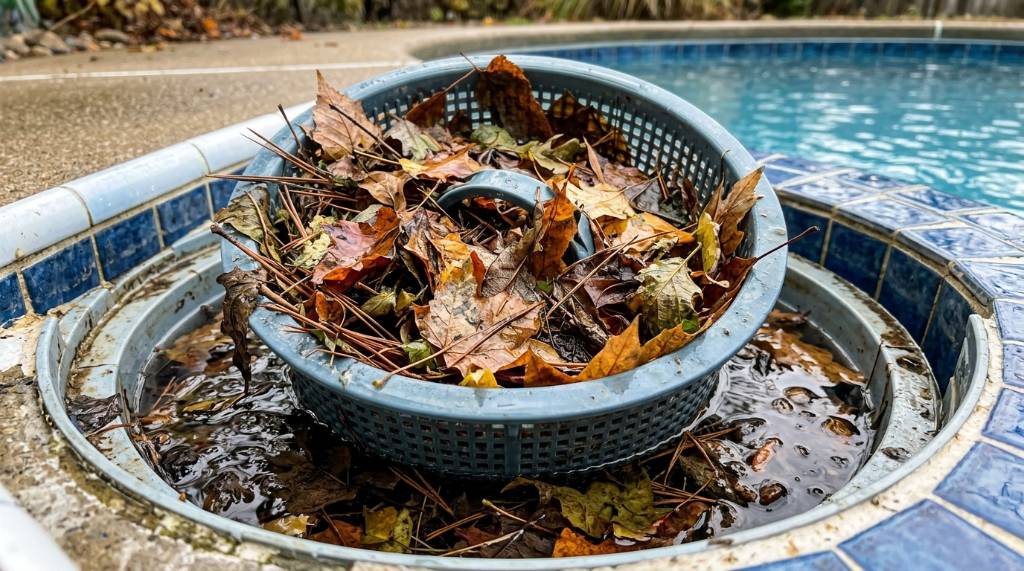
New York’s fall leaf drop is intense and short. A pool left open through October can collect inches of wet leaves that sink, decay, and stain plaster or vinyl within days. Tannins from oak and maple leaves create brown staining that chlorine won’t lift — it needs an ascorbic acid treatment or a specialty stain remover.
Prevention beats treatment here:
- Skim the surface daily during peak leaf drop.
- Use a leaf-specific vacuum or a leaf canister inline to prevent clogs.
- Cover the pool or close it before leaves become waterlogged and sink.
- Remove debris within 24–48 hours to minimize staining risk.
A leaf rake alone won’t handle sunken, decomposed leaves. You need a vacuum with enough suction and a debris bag designed for wet organic matter, or you’ll spend the whole afternoon re-clogging your skimmer line.
Clogged Filters and Weak Suction
When a vacuum loses suction mid-clean, homeowners often blame the cleaner. In reality, the cause is usually one of the following:
- A full skimmer basket or pump strainer basket restricting flow.
- A cartridge filter that needs cleaning or replacement.
- An air leak in the vacuum hose or a cracked hose section.
- A partially closed valve on the suction line.
- A worn vacuum head with degraded brushes or wheels.
Diagnose in that order before assuming the vacuum failed. A simple pressure gauge reading on the filter will tell you whether the system is restricted — a high reading usually means the filter is loaded, while a low reading often points to an air leak or blockage.
Chemistry Problems That Mimic Cleaning Problems
Sometimes the water looks dirty but the real issue is water balance. Cloudy water with correct chlorine is often a filtration or circulation problem, not a cleaning problem. High pH reduces chlorine effectiveness and encourages scaling and cloudiness. High cyanuric acid — common in pools that use stabilized chlorine tabs all season — locks chlorine in a form that can’t sanitize, which lets algae take hold even when test strips show “normal” chlorine.
Before spending money on new cleaning equipment, test for:
- Free chlorine versus total chlorine
- pH (ideally 7.4–7.6)
- Total alkalinity
- Cyanuric acid level
- Calcium hardness
Water that’s chemically balanced is dramatically easier to keep clean. If your vacuum is working but the pool still clouds up after cleaning, chemistry is usually the culprit.
Seasonal Timing: Why New York Is Different
New York pools open late and close early, which compresses both the debris load and the cleaning window. The state’s climate means:
- Opening happens right as pollen peaks.
- Mid-summer heat drives fast algae growth.
- Fall leaf drop coincides with cooler water that slows chlorine activity.
- Winterization prep requires a thorough cleaning before the cover goes on, or debris sits for months.
That rhythm means a New York pool owner typically needs more cleaning capacity than someone in a year-round climate, not less. A single vacuum setup that works fine in Florida may struggle here because the debris mix is more varied — pollen, leaves, and algae together rather than just one, check out our guide on how to start a carpet cleaning business for more home service tips.
Matching the Vacuum to the Problem
No single vacuum type handles every New York pool issue equally well. The right choice depends on your debris profile:
| Vacuum Type | Best For | Weakness |
|---|---|---|
| Manual/suction head | Targeted spot cleaning, heavy leaves | Labor-intensive, requires hose setup |
| Pressure-side cleaner | Continuous debris pickup, larger debris | Needs booster pump, less effective on fine particles |
| Suction-side cleaner | General debris, low upfront cost | Debris goes to main filter, can clog |
| Robotic cleaner | Fine debris, independent filtration | Higher upfront cost, needs charging |
For most New York homeowners dealing with pollen and algae, a robotic cleaner with an internal fine filter tends to reduce both labor and filter load. For yards with heavy leaf drop, a manual vacuum paired with a leaf canister handles the worst days efficiently.
Common Mistakes That Make Problems Worse
A few habits consistently turn small issues into expensive ones:
- Vacuuming to waste without checking the valve setup — you’ll lose water and could damage the pump if run dry.
- Shocking before vacuuming — dead algae sinks and settles before you can remove it, causing more staining.
- Ignoring the pump strainer basket — a clogged basket is the most common cause of “weak vacuum” complaints and can burn out the motor.
- Skipping brushing — algae roots cling to walls and need physical removal before vacuuming is effective.
- Leaving debris on the bottom overnight — organic material starts staining within hours in warm water.
Frequently Asked Questions
How often should I vacuum my pool in New York?
During peak season, most New York pools need vacuuming at least once a week, and more often during pollen season or after storms. Pools under heavy tree cover often need twice-weekly cleaning from April through June.
Why does my pool turn green so fast after rain?
Rain delivers nutrients and can raise pH, both of which weaken chlorine. Combined with warm summer water and elevated cyanuric acid from stabilized chlorine, a single storm can trigger a bloom within two to three days.
Can I vacuum algae while the pool is still green?
It’s better to shock first, let the algae die, then vacuum to waste so the dead material leaves the pool entirely. Vacuuming live algae often just breaks it up and spreads it through the filter system.
Is a robotic pool vacuum worth it for a seasonal pool?
For pools with pollen, fine dirt, or frequent light debris, yes — the internal filtration and independence from the main pump save time and protect the filter. For pools with only occasional heavy leaf drop, a manual vacuum may be enough.
Why does my vacuum lose suction after a few minutes?
Usually it’s a clogged skimmer basket, a full filter, or a small air leak in the hose. Check the baskets first, then inspect each hose section for cracks or loose connections.
What causes brown stains on the pool floor and walls?
Organic stains from decomposing leaves and mulch runoff are the most common cause in New York. Metallic stains from corroded equipment or well water are also possible. Organic stains typically lift with an ascorbic acid treatment; metal stains may need a sequestrant.
Conclusion
Most pool cleaning problems in New York come down to timing and debris type, not neglect. Algae, pollen, and leaves each demand different tools and different cleaning schedules. Checking water chemistry before blaming equipment, vacuuming to waste after shocking, and matching the cleaner to your pool’s dominant debris will solve the majority of recurring issues. Start by identifying which problem you actually have — green water, fine film, or sunken leaves — then choose the cleaning method that fits it instead of repeating the same routine.
